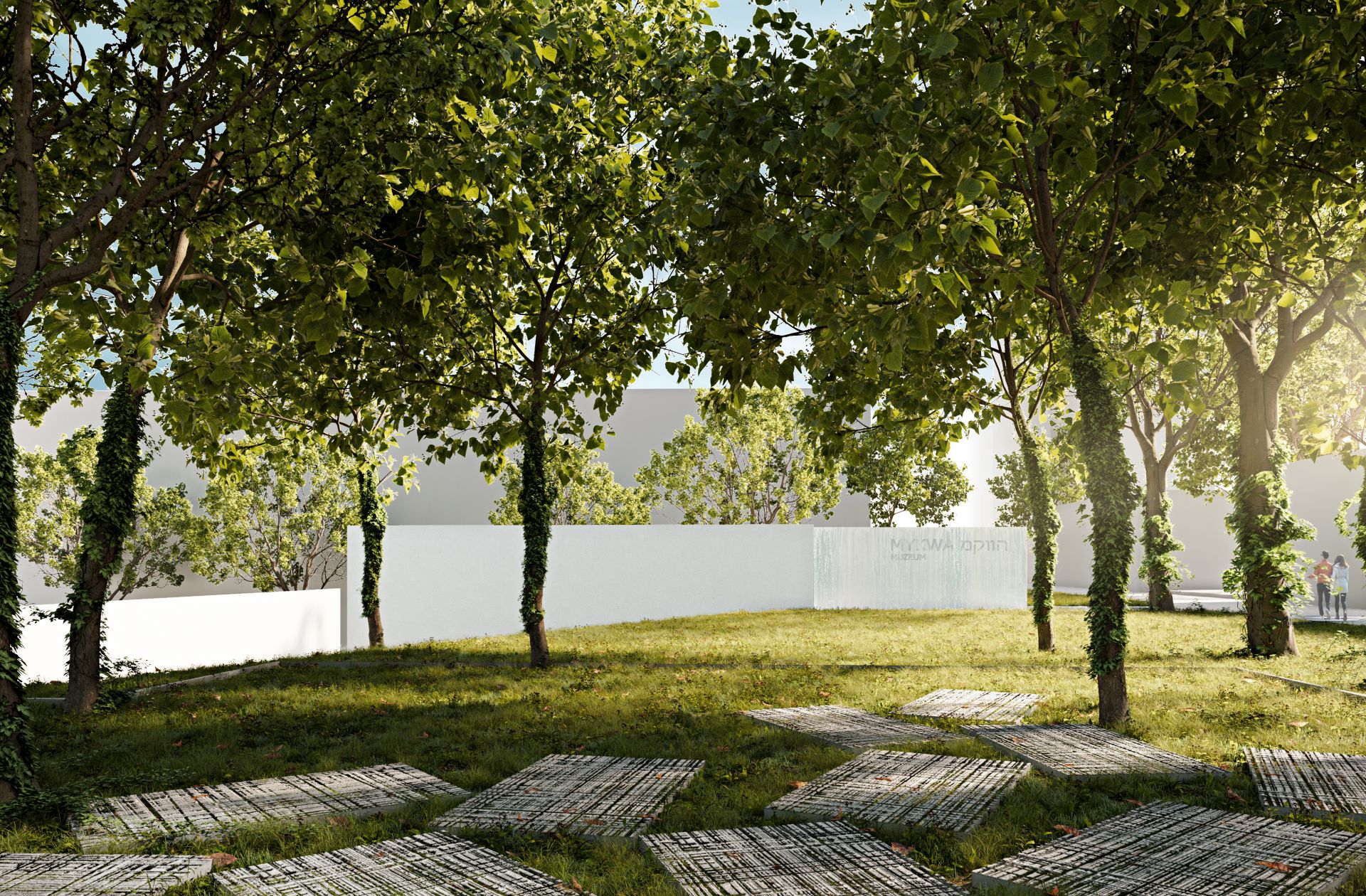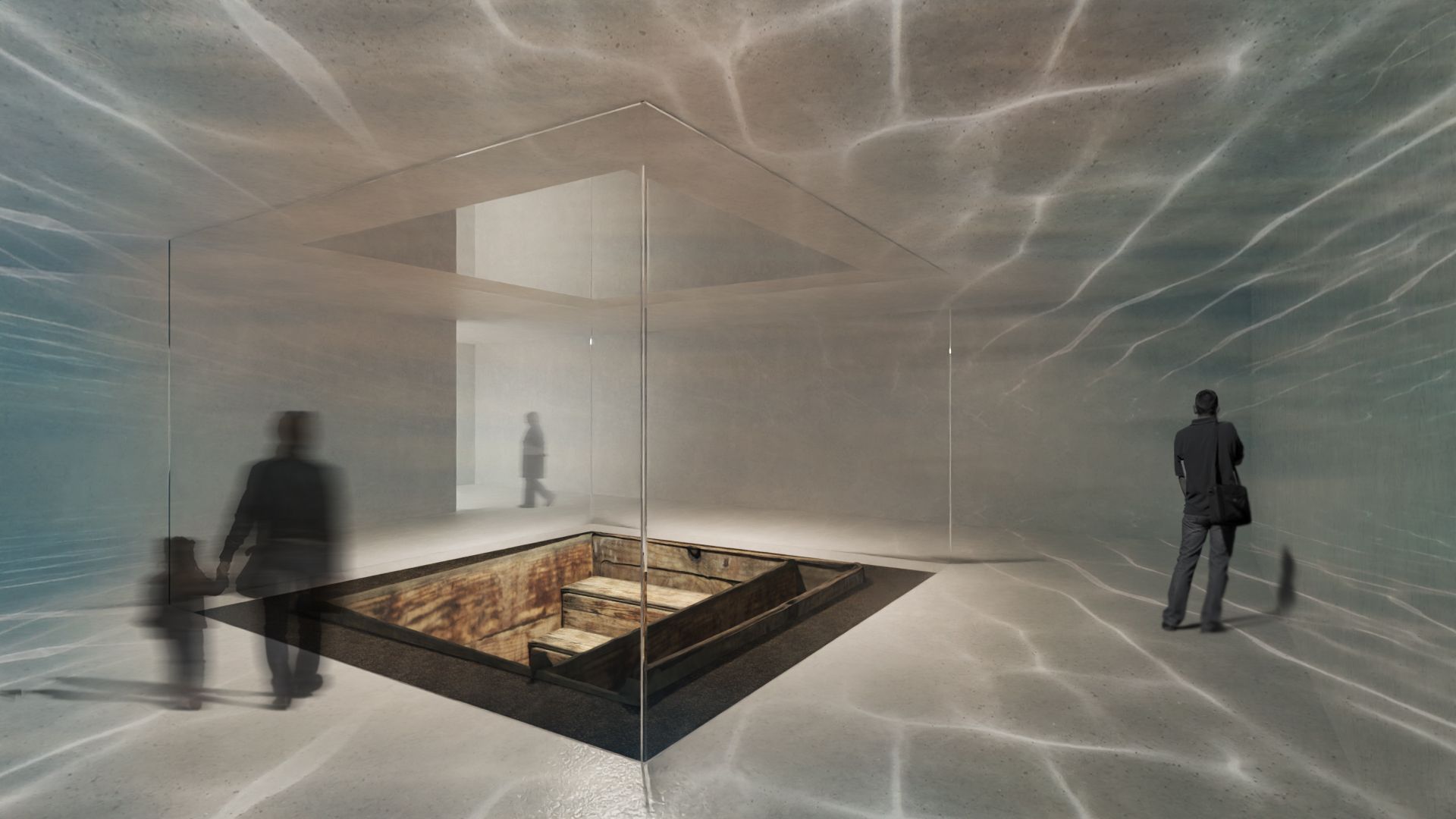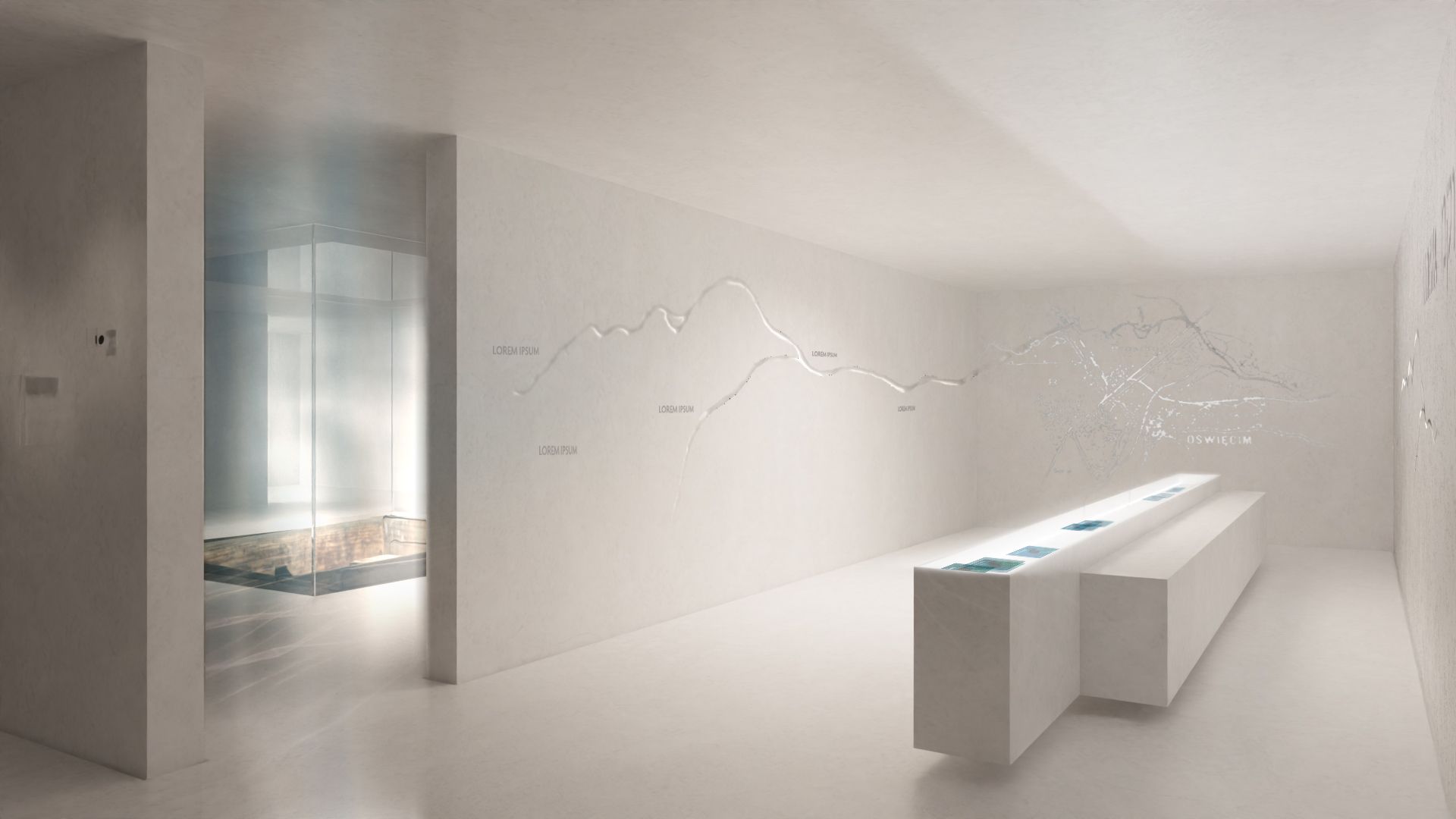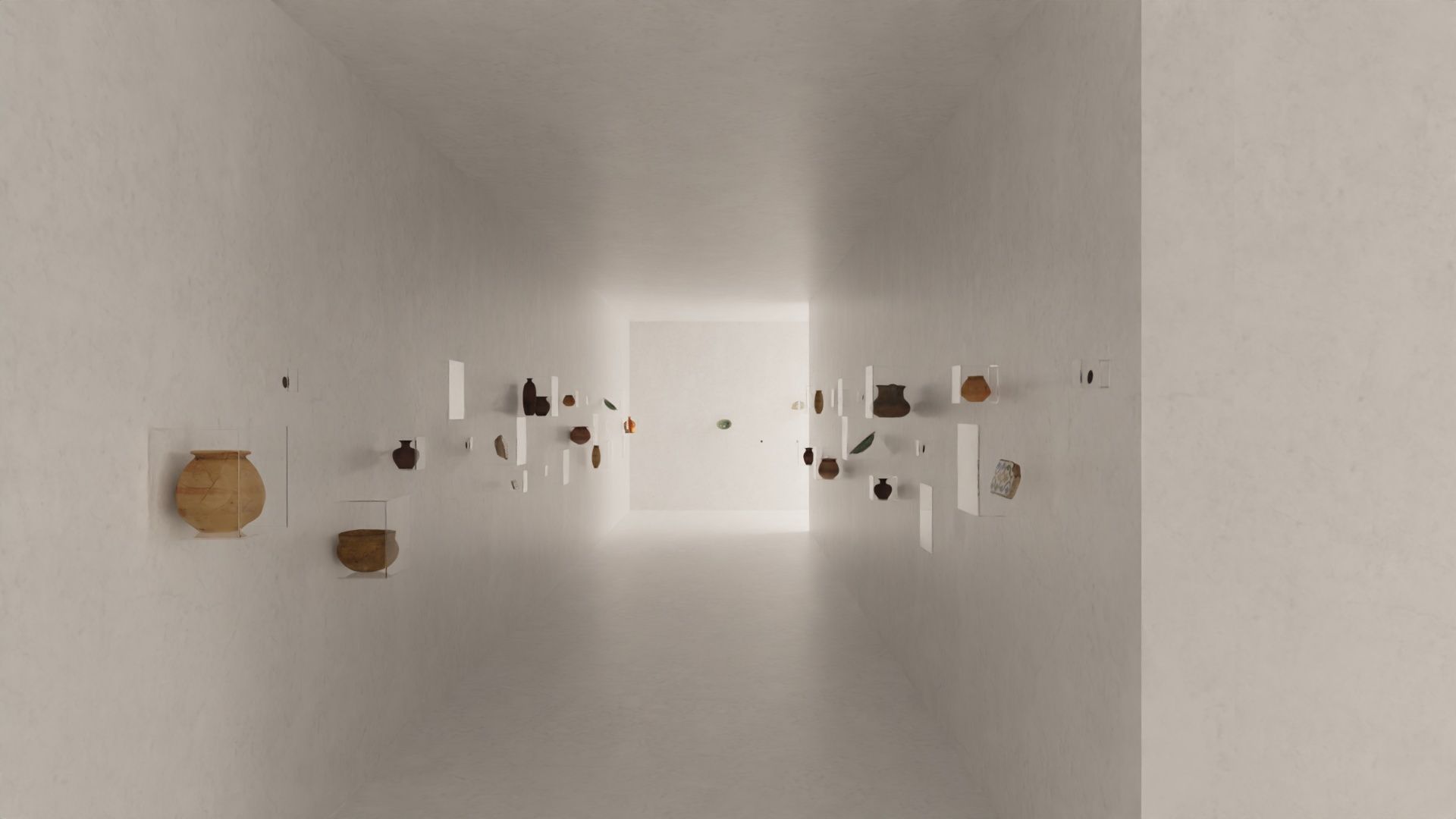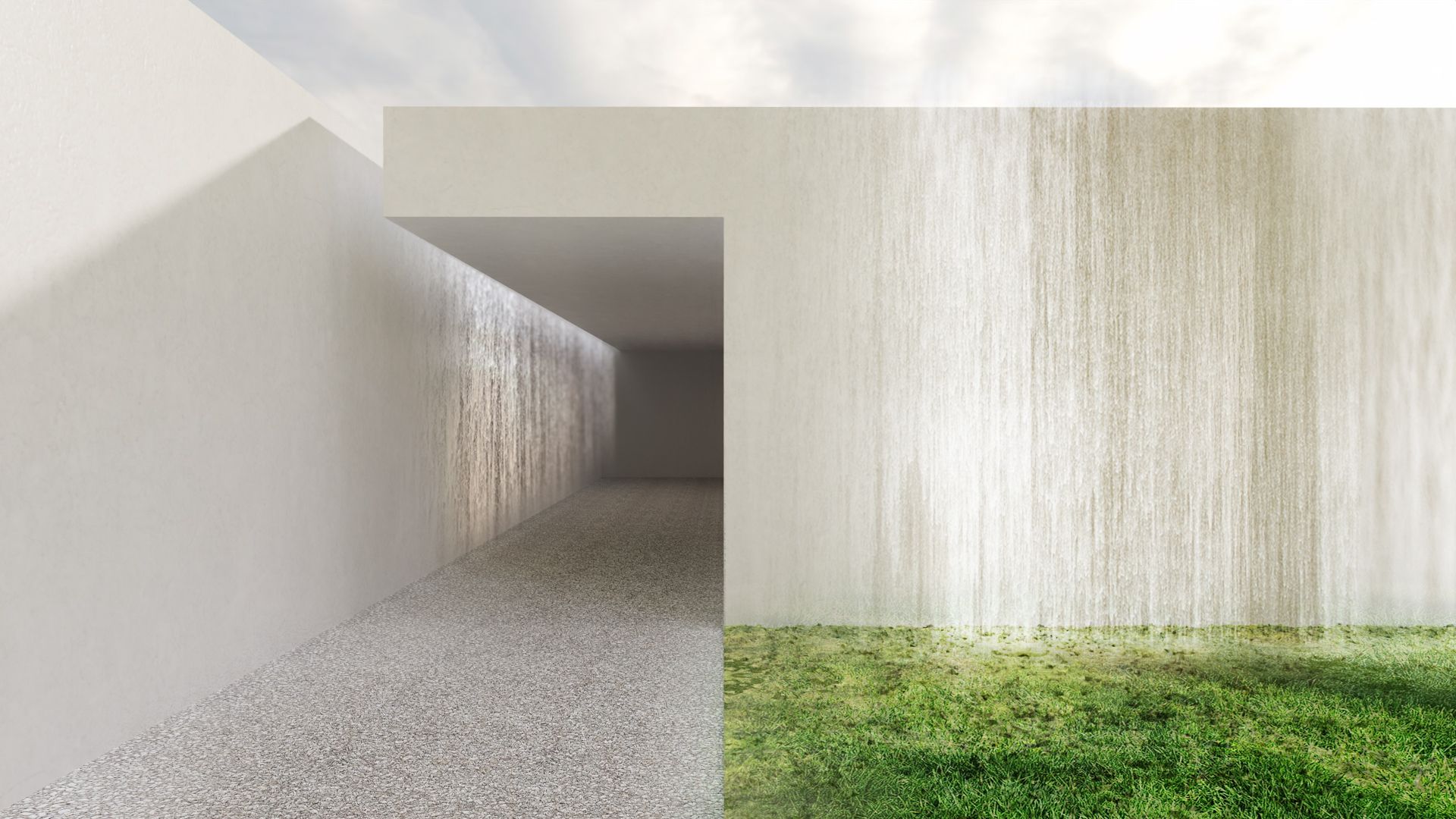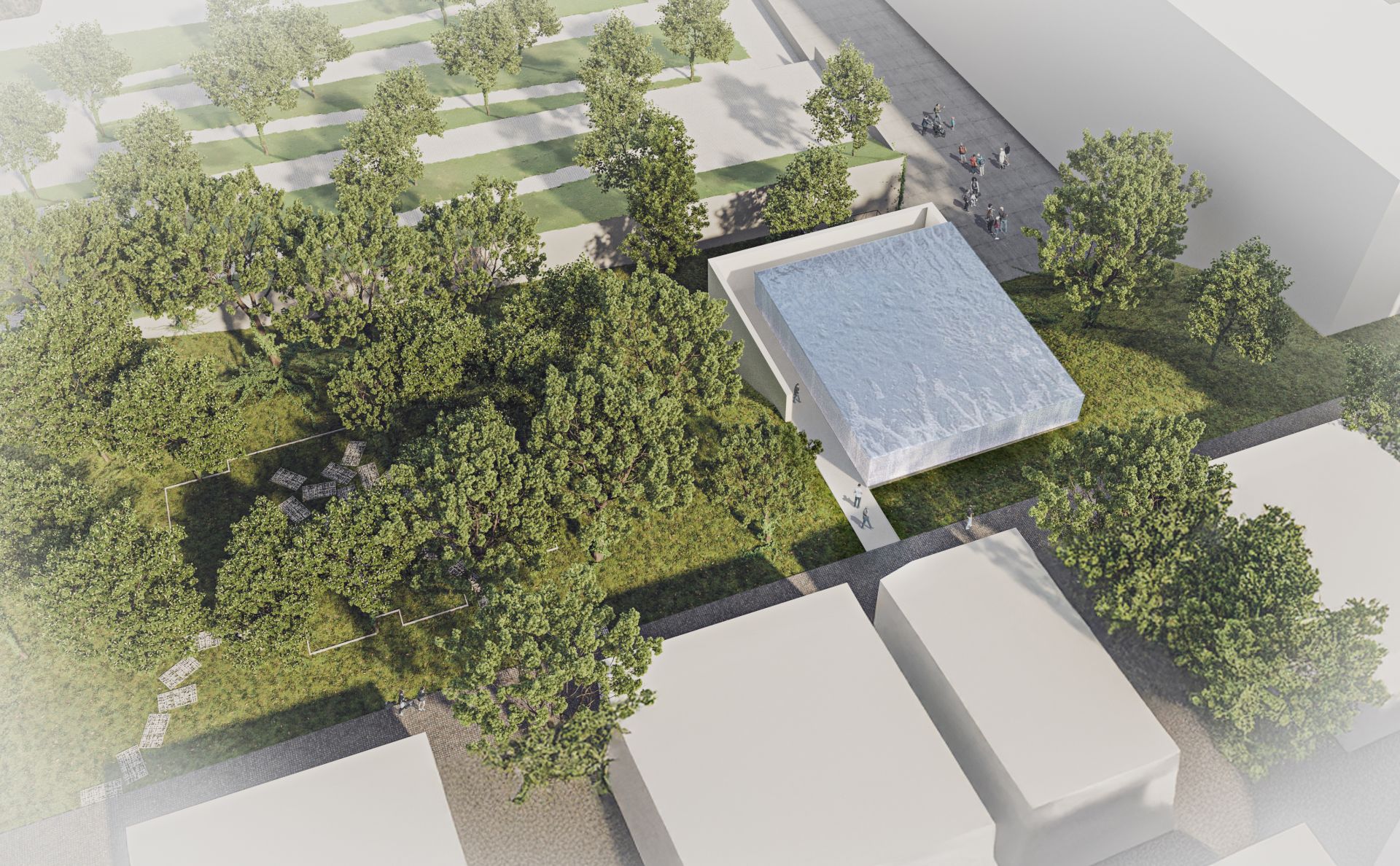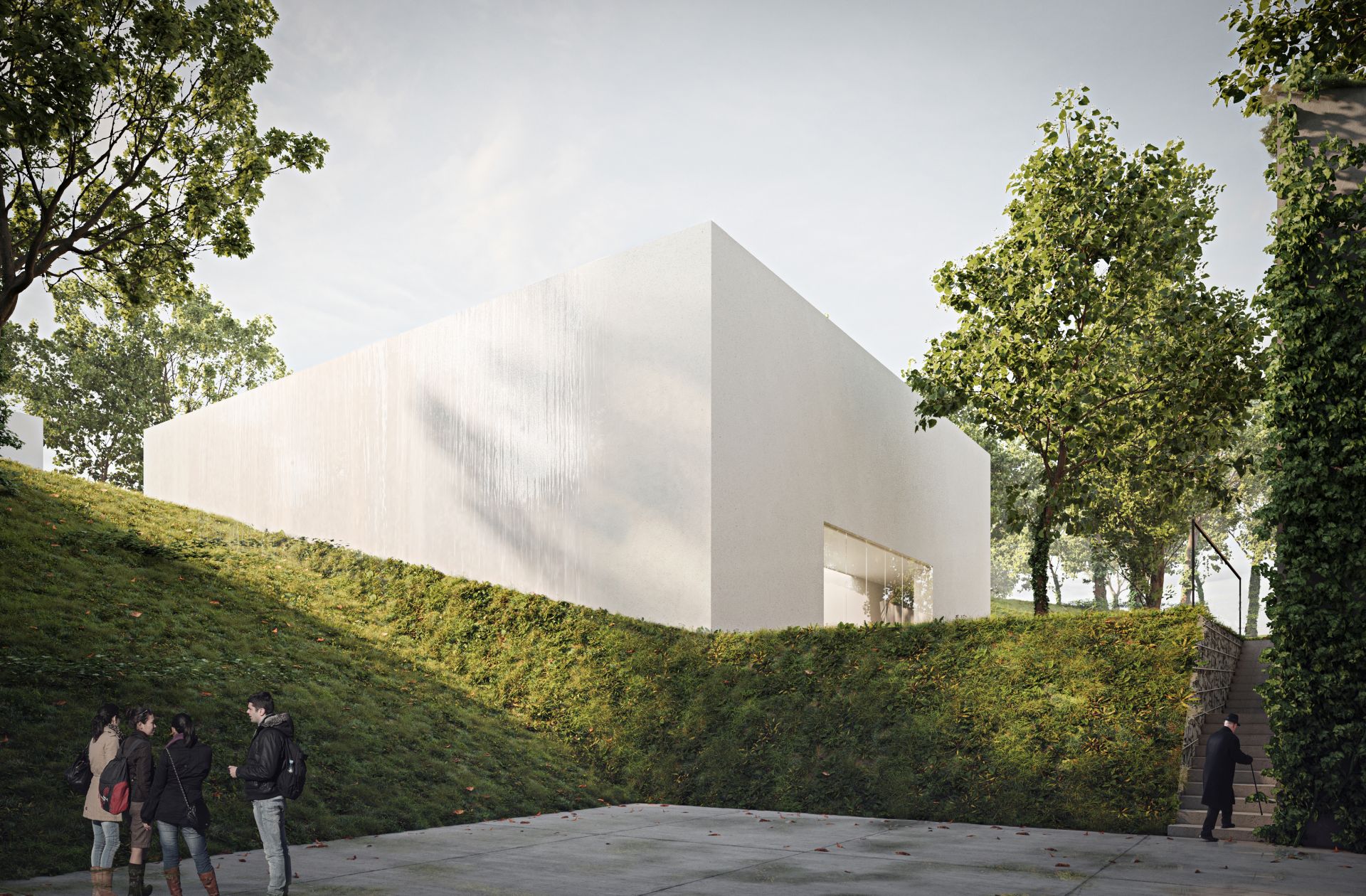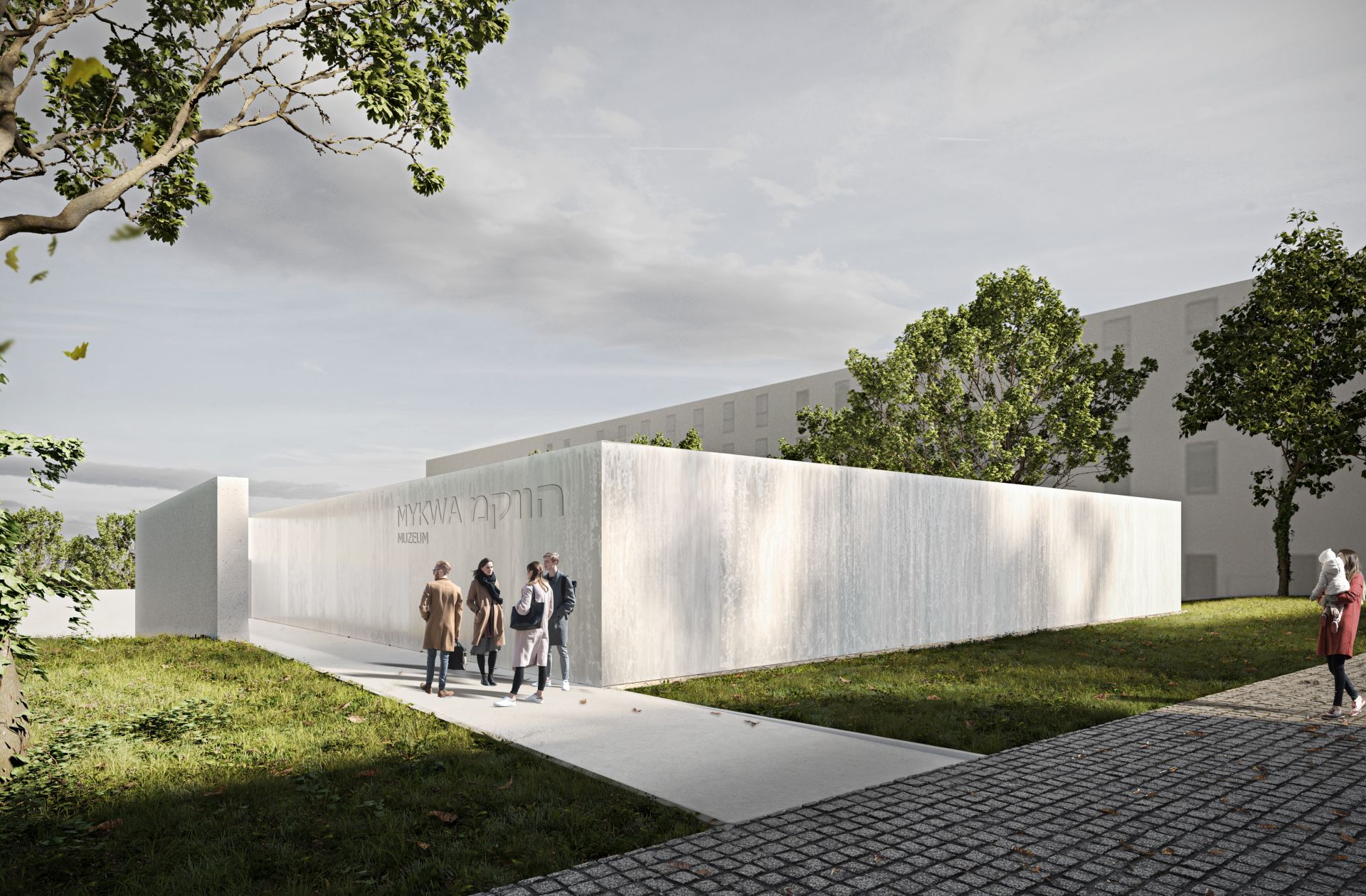
Nizio Design International has developed the architectural concept and the conceptual design for the permanent exhibition of a new exhibition pavilion in Oświęcim. The building is intended to present a unique 18th-century wooden mikveh, discovered in 2023 during archaeological research carried out on the Boulevards. The pavilion will be located in the immediate vicinity of the Memorial Park of the Great Synagogue, a site of particular historical and symbolic significance.
The approximately 600 m? building will become a new space for telling the story of the several-hundred-year presence of the Jewish community in Oświęcim. The pavilion will stand near the site of the former Great Synagogue, which was destroyed by the Germans at the beginning of World War II. The discovered mikveh is currently one of the most valuable material traces of Jewish life in this part of Europe. The ritual bath, used for spiritual purification through immersion in so-called “living water,” was once a fundamental element of everyday religious life. Although it was initially believed that the structure might be as much as four centuries old, the results of archaeological, historical, and dendrological research clearly indicate that it was built in the second half of the 18th century. The exceptionally good state of preservation of the wooden structure makes the find unique on a European scale.
From Discovery to Exhibition
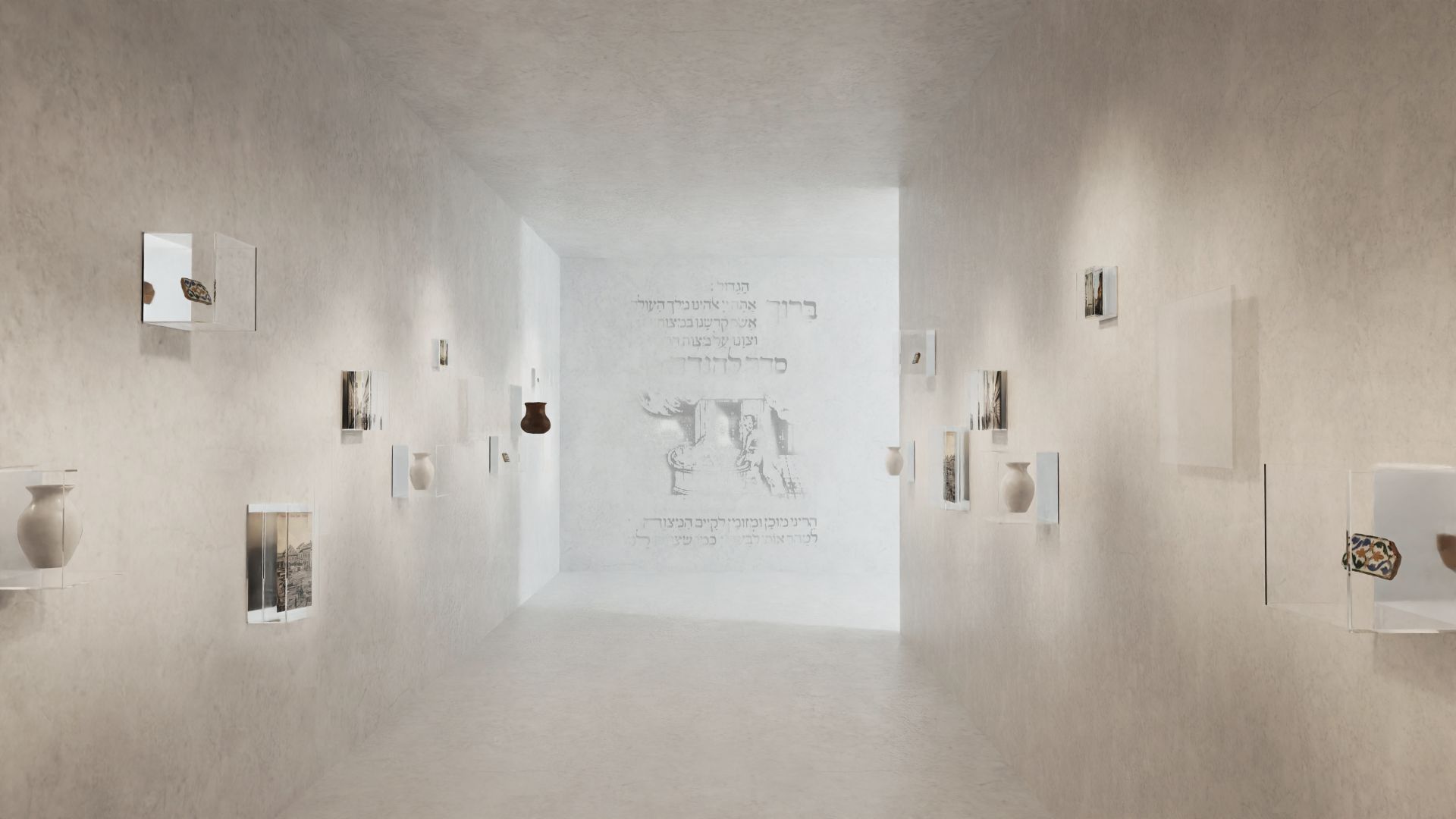
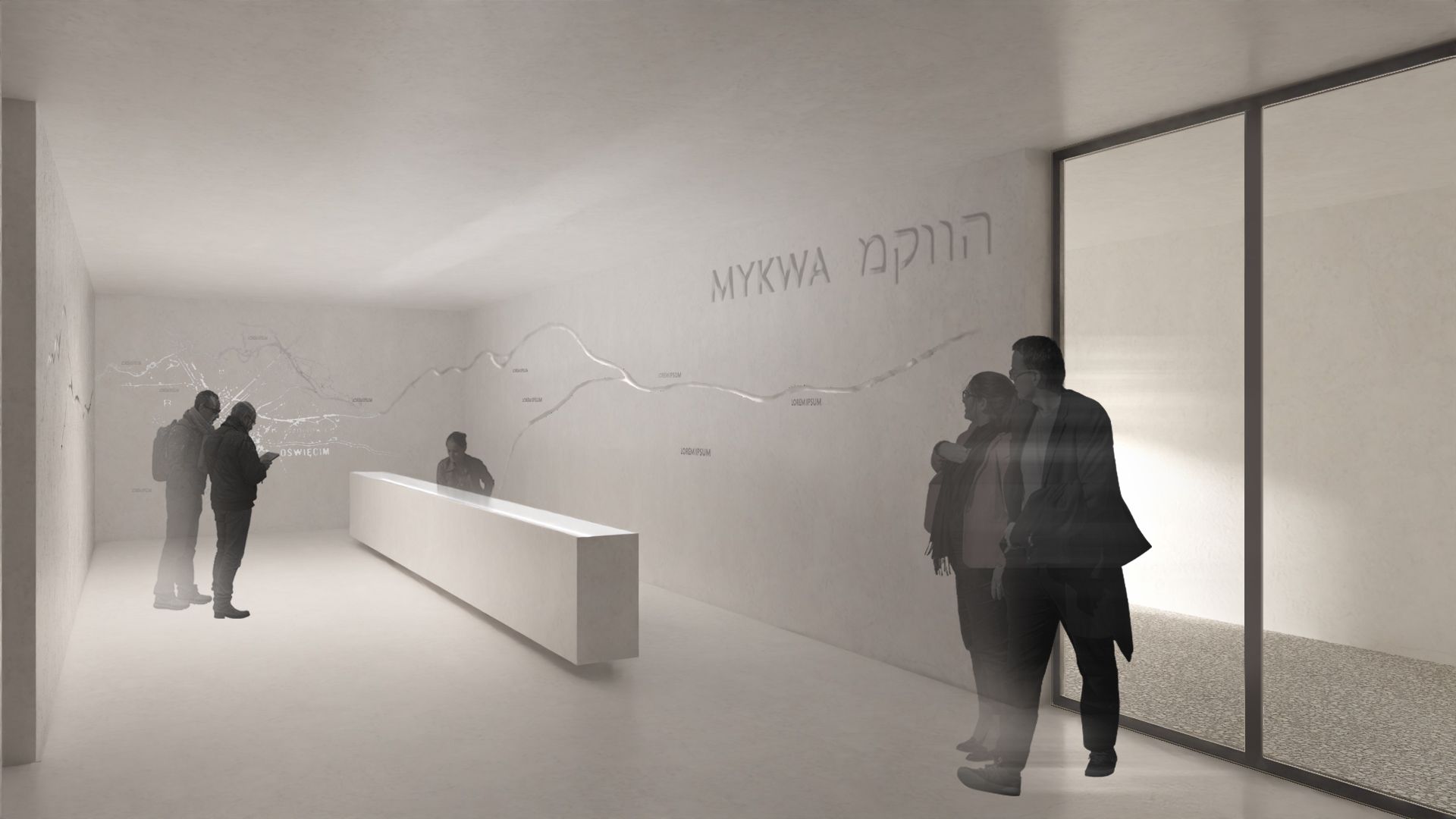
At present, the remains of the mikveh are housed in a conservation studio, where specialized preservation work is being carried out to prepare the object for future exhibition. At the same time, the Oświęcim Castle Museum is conducting a tender procedure for the preparation of complete design documentation for the pavilion, including the development of the surrounding area. It is estimated that the design phase, together with obtaining all required approvals, will take about one year. According to the functional assumptions, the pavilion will be a two-storey building, with the lower level partially embedded in the slope. On the upper level, Mirosław Nizio’s studio has planned a permanent exhibition devoted to the mikveh and the context of its use, while the lower level will house technical facilities, cloakrooms, toilets, and a small educational room. The entrance to the building is planned from Berka Joselewicza Street.
The Memory of Jewish Oświęcim
The planned exhibition will not replicate the narrative of the Jewish Museum in Oświęcim, but will instead complement it. It will focus on the history and significance of the discovered mikveh as a starting point for a broader story about the daily life, spirituality, and rituals of the city’s Jewish inhabitants. Before World War II, Jews constituted more than half of Oświęcim’s population; only a handful survived the Holocaust. The last Jewish resident of the city, Szymon Kluger, died in 2000.
The architectural concept and exhibition design are the responsibility of the renowned and respected architectural firm Nizio Design International, a studio founded by Mirosław Nizio and specializing in the design of museums, exhibitions, and sites of memory. NDI is a co-author of, among others, the permanent exhibitions of the Warsaw Rising Museum and the POLIN Museum of the History of Polish Jews. The design of the mikveh pavilion in Oświęcim aligns with the studio’s mission of creating contemporary forms of historical storytelling.
Construction of the pavilion and implementation of the exhibition are planned to begin in 2027. The investment will be co-financed from the Oświęcim Strategic Government Program for the years 2026–2030.