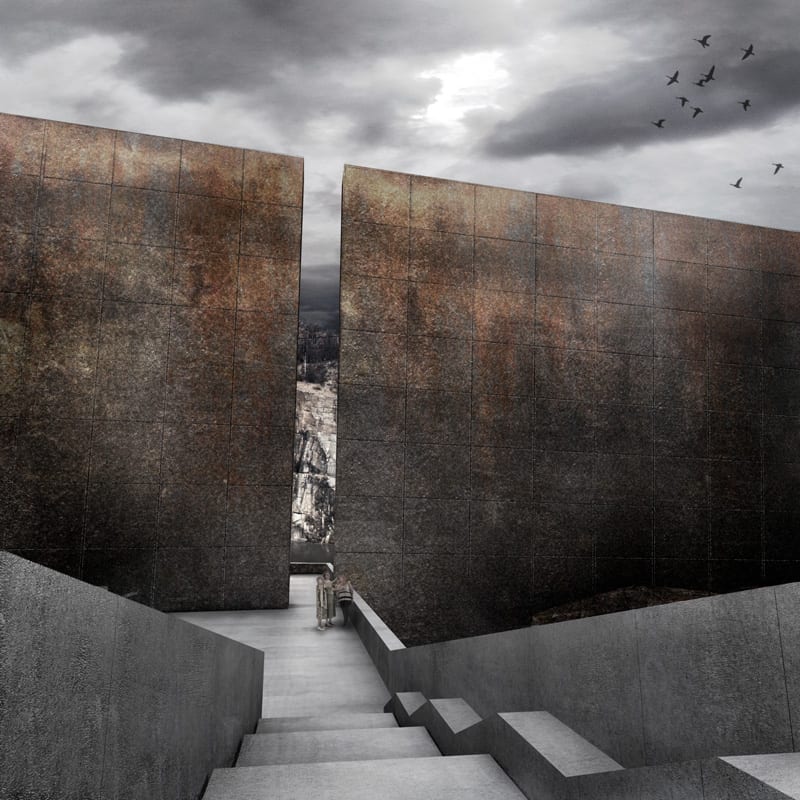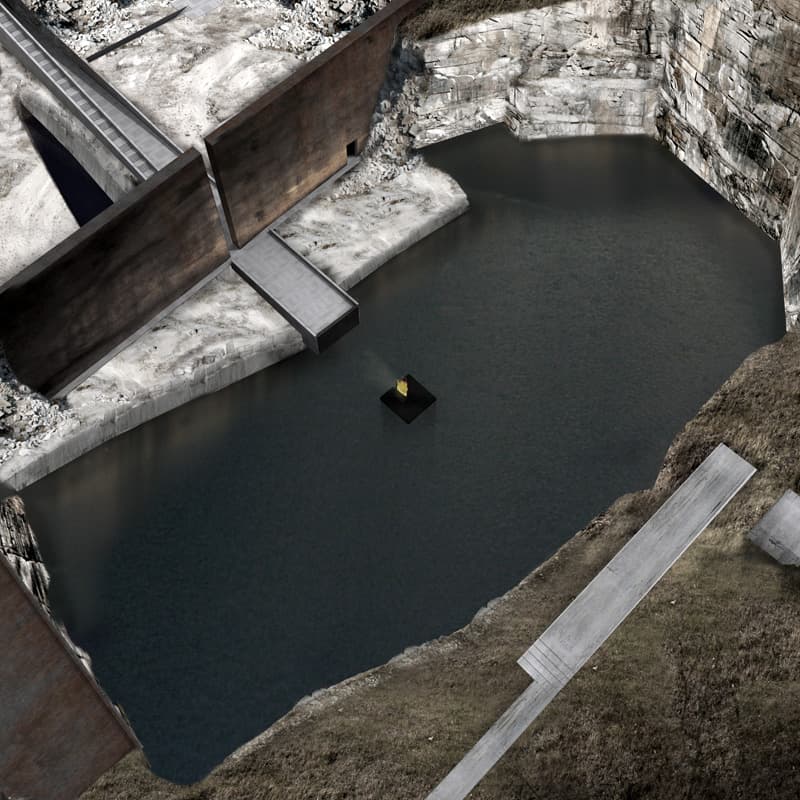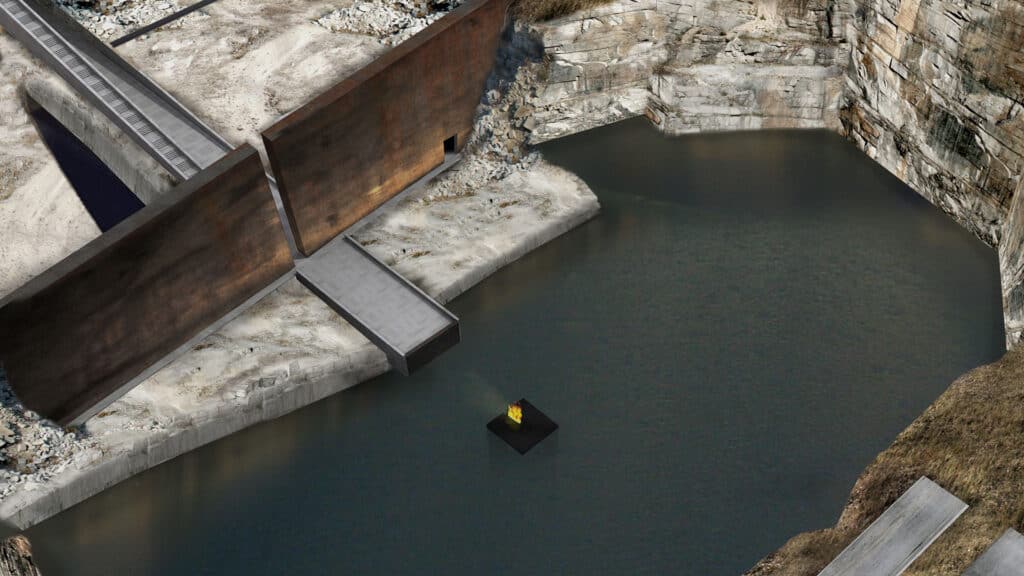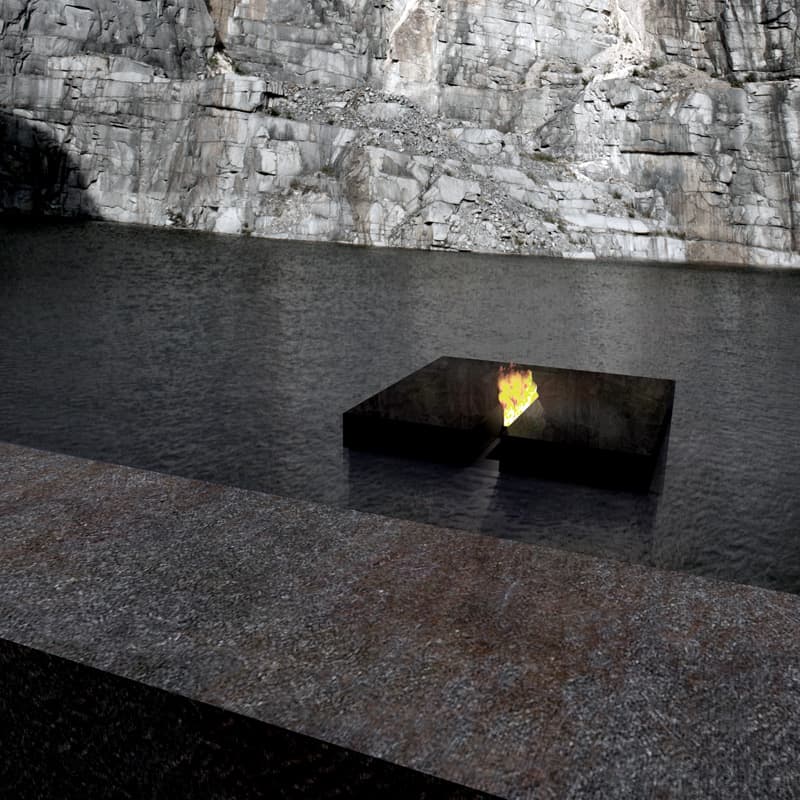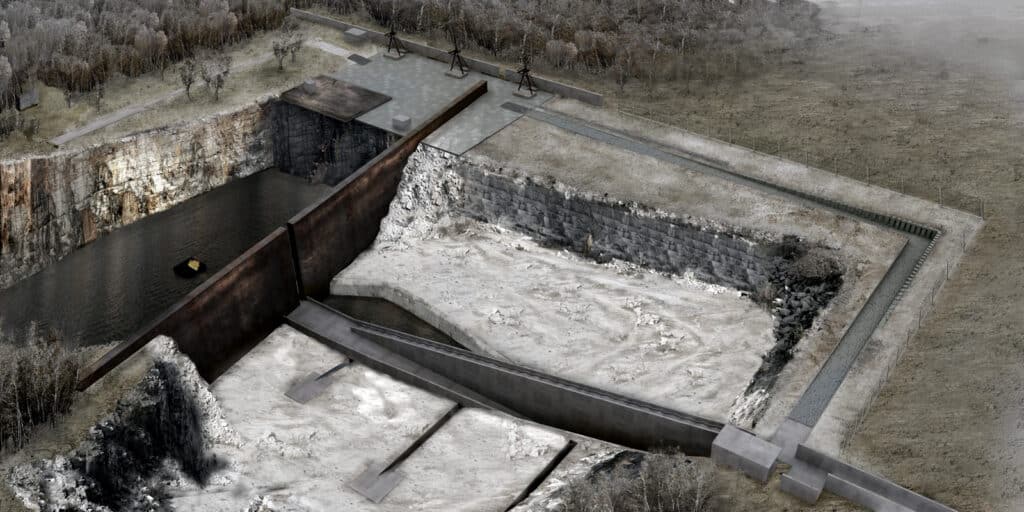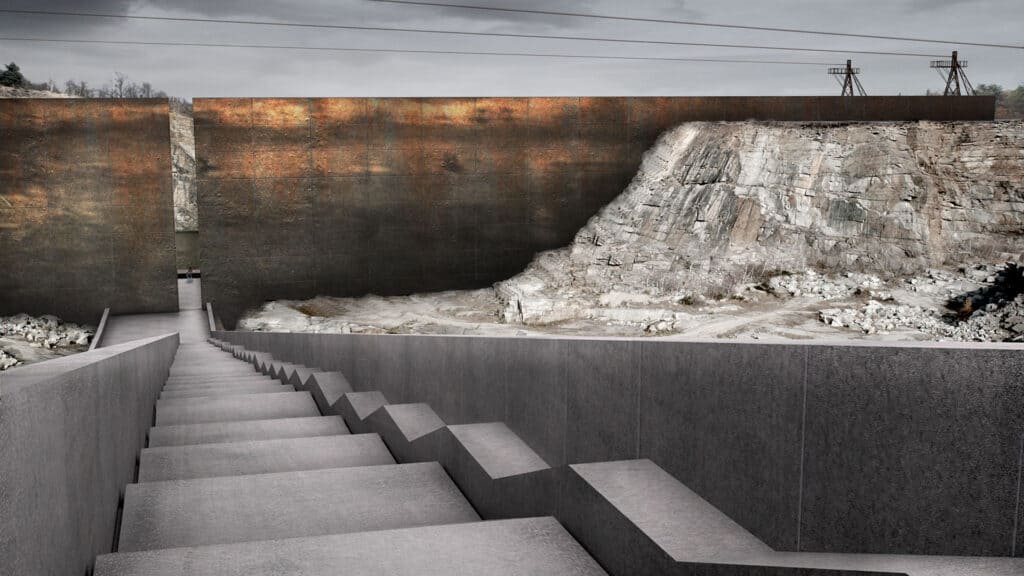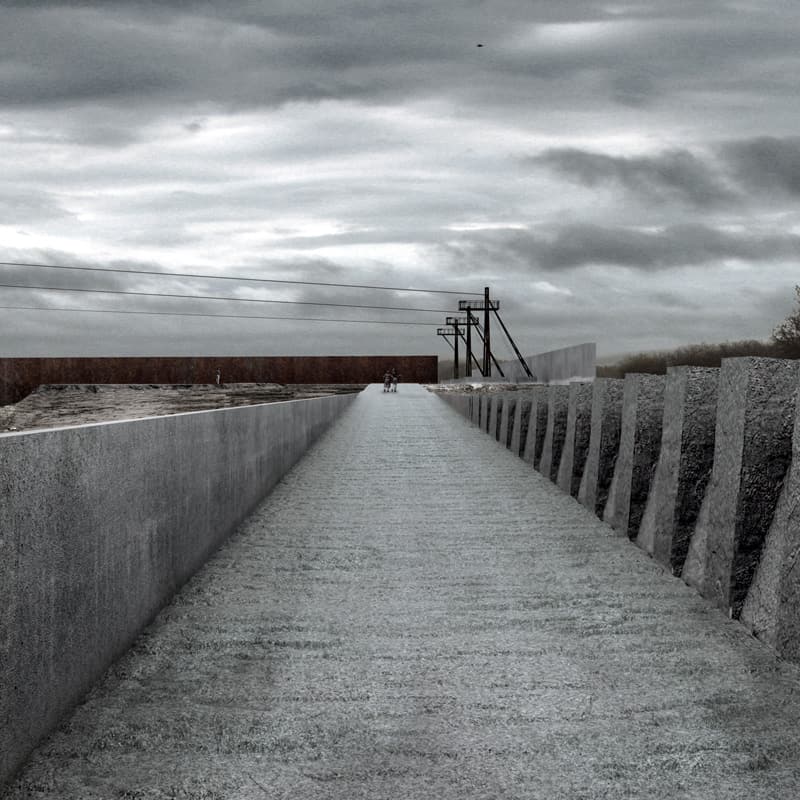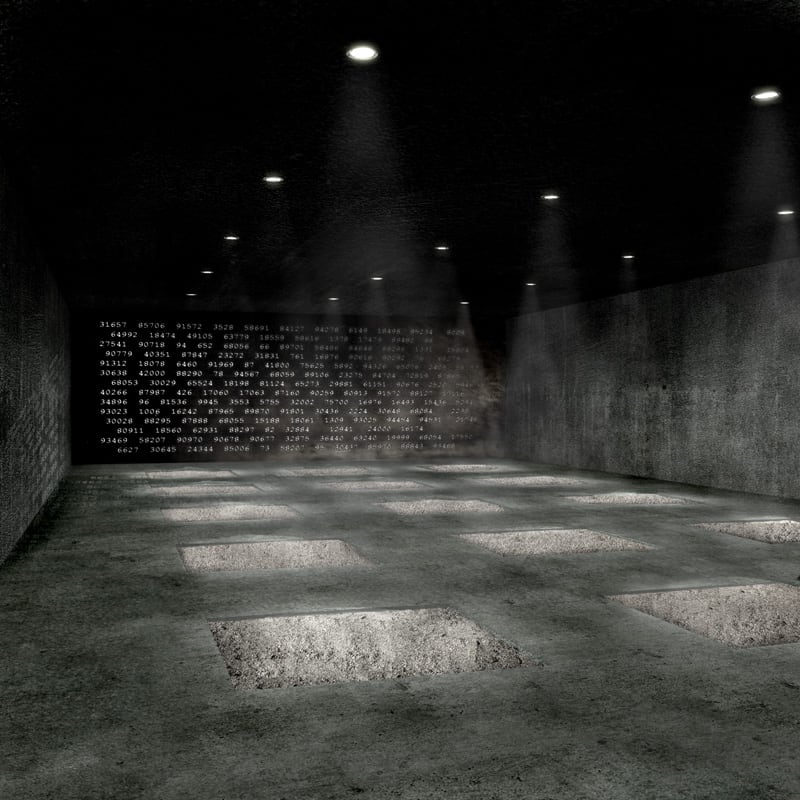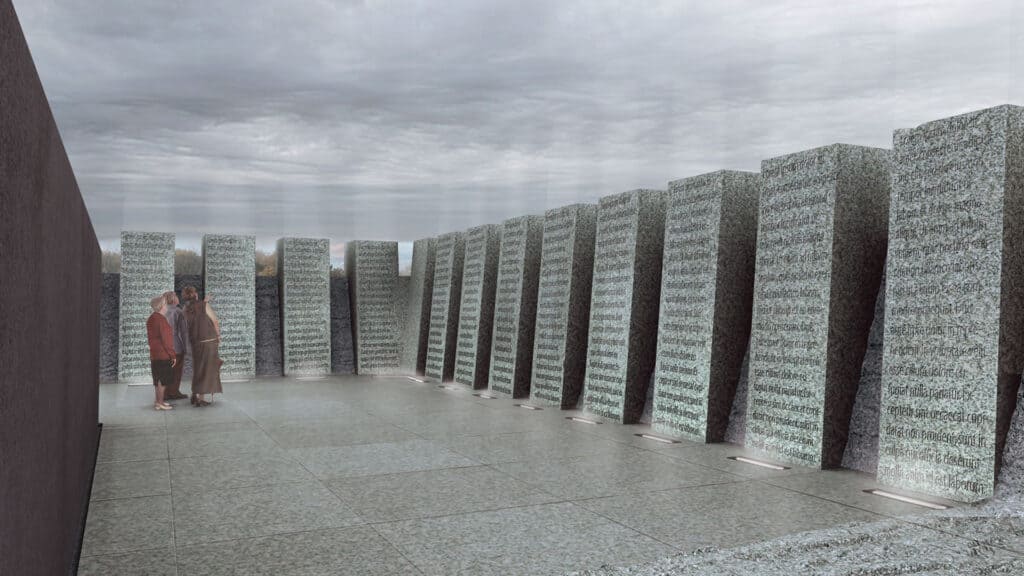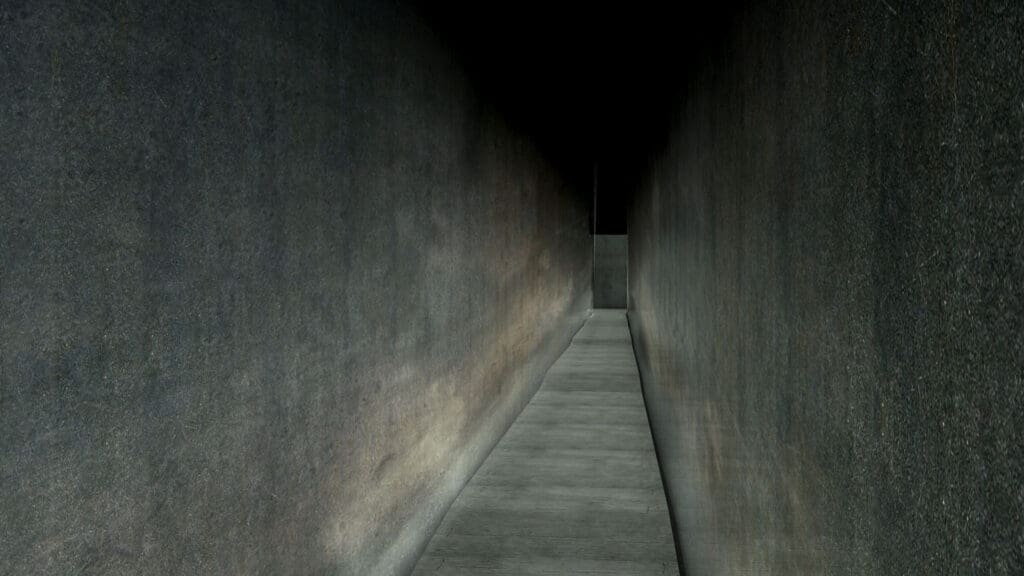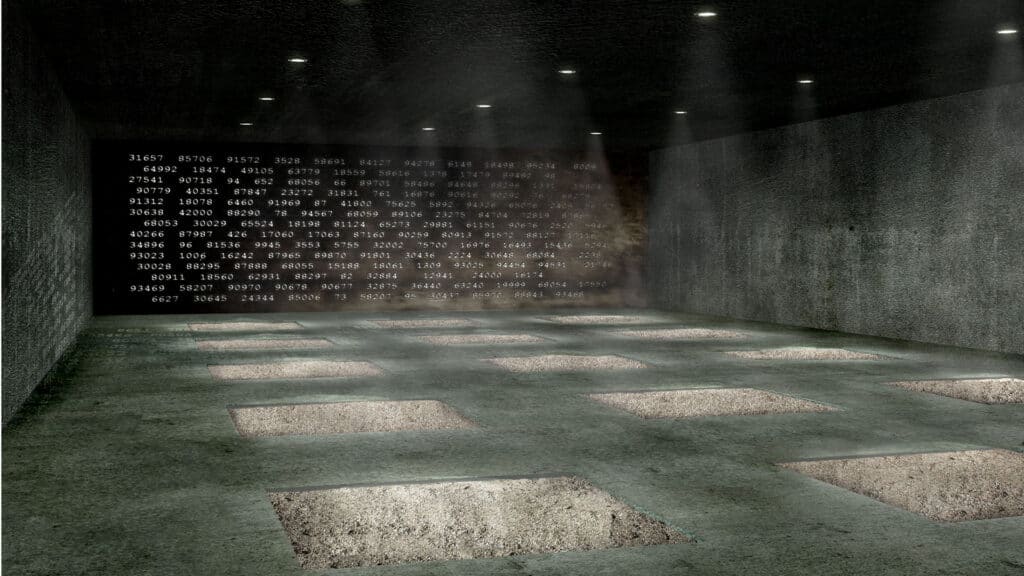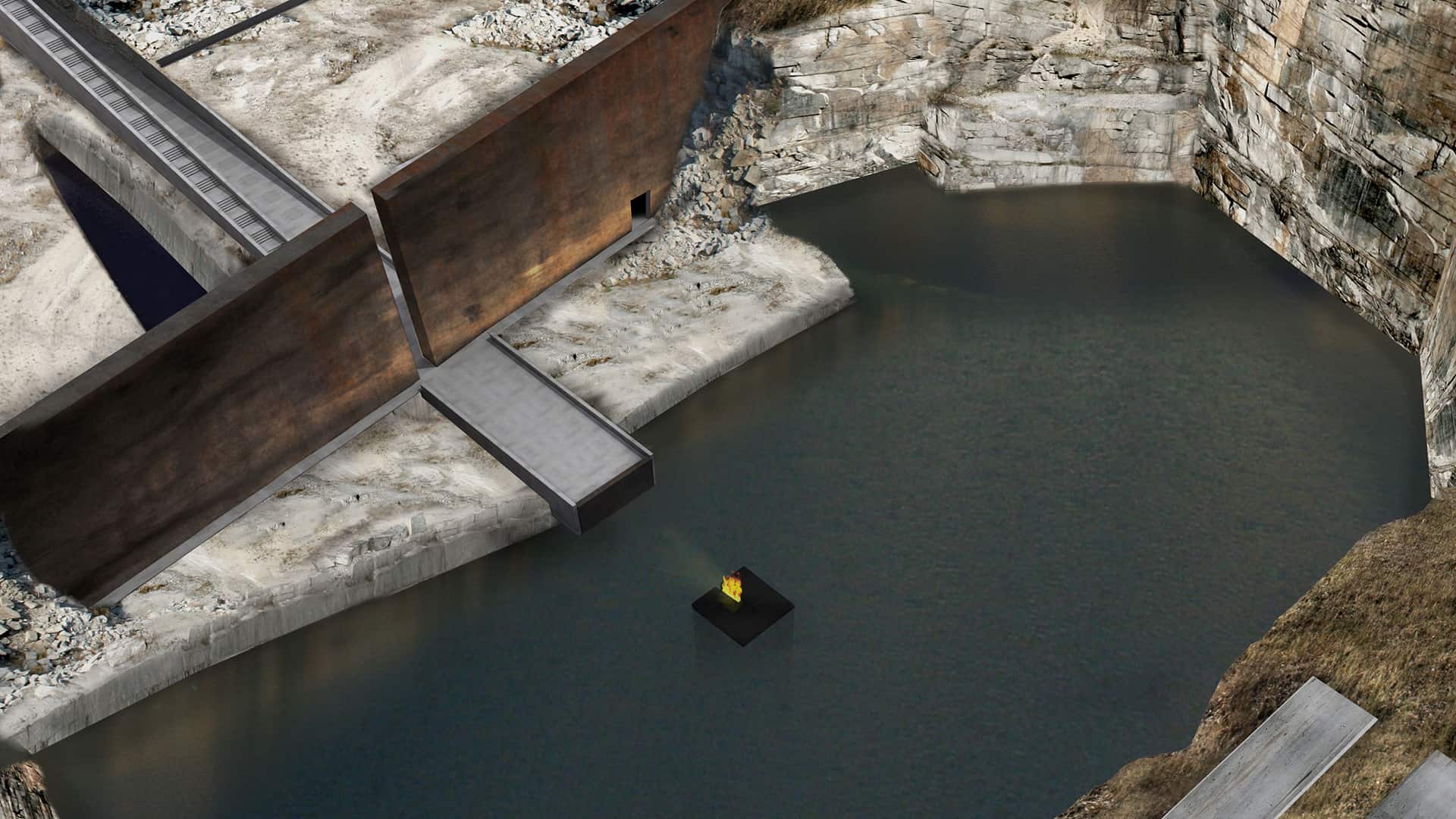
Wizualizacja projektu "Kamienne Piekło - KL Gross Rosen".

“STONE HELL” KL GROSS-ROSEN IN ROGOŹNICA

This is my most important project. I designed ‘Stone Hell’ so that, in order to learn the history, visitors would have to walk a path similar to the one taken every day by the prisoners of the Nazi KL Gross-Rosen camp who worked in the quarry.
— Mirosław Nizio

Developed by the Nizio Design International studio in 2012, the “Stone Hell – KL Gross-Rosen” project is a concept for commemorating the former German concentration camp KL Gross-Rosen, located in the former quarry at Rogoźnica.

The aim of the project was to create a space of memory whose form and structure would respond to the dramatic topography of the site. The symbolic path of memory begins with monumental concrete steps leading down into the quarry. The route follows the historical path taken by the prisoners at work – from the morning march to the quarry face to the transport of hewn granite blocks out of the quarry. Tension builds gradually for visitors as they walk through the quarry.

The steps lead to the historic part of the quarry, which is crossed by a massive, 30-metre-long metal partition with a vertical slit at its centre. The split wall symbolises the boundary between life and death, as well as a trauma that has never healed. Beyond it, visitors arrive at a viewing platform suspended above the flooded quarry pit. From there they can see a black granite cuboid submerged in the water, holding a burning votive candle – an eternal flame of remembrance.

Continuing on, visitors reach the Crypt – an austere, quiet space intended for contemplation and reflection. From here they enter the Path of Memory, passing granite blocks engraved with the names of prisoners on their right. Further on, the narrative is carried by the historical railway tracks along which prisoners, during the period when KL Gross-Rosen was in operation, hauled wagons loaded with quarried granite.

The Path of Memory connects the exit from the quarry with Granite Square – the place where the number of people murdered or who died of exhaustion at work in the quarry on a given day was tallied. It was also here that many prisoners lost their lives, either thrown from the cliff edge or by taking their own lives. Granite Square is also the largest viewing platform, offering a view over the flooded quarry and the votive flame rising from its waters.

After passing through another metal partition, visitors come upon the historic quarry face and three cranes used during the war. The walk through the quarry ends at a final viewing platform, on the opposite side from the entrance point.

Although the “Stone Hell” project was never built, it remains an important voice in the discussion on contemporary memorial architecture. By combining formal minimalism with an immense emotional charge, Mirosław Nizio’s concept takes part in the international discourse on the design of commemorative sites, while maintaining deep respect for local history and the testimonies of human suffering.


KL Gross-Rosen was located in Lower Silesia, between Wrocław and Wałbrzych (today’s Rogoźnica). In August 1940 the Germans established a labour camp here as a subcamp of KL Sachsenhausen. The first transport of prisoners arrived on 2 August 1940 and numbered close to 100 prisoners, who were assigned to work in the local granite quarry. On 1 May 1941 the camp gained the status of an independent concentration camp, recorded in the documents as KL Gross-Rosen. By the end of 1941, six transports had brought a total of 766 prisoners, raising the camp’s population to almost 1,500. In 1942 a further 60 transports arrived, bringing around 5,400 people, and in 1943 – probably more than 70 transports, with around 8,600 prisoners.

The camp underwent a major transformation in 1942, when subcamps began to be established across Lower Silesia, the Sudetes and the Lublin region, close to industrial plants and military fortification works. Many German companies set up factories in the area in order to make use of the prisoners’ unpaid labour. From 1943 to 1945, a “re-education” labour camp run by the Wrocław Gestapo operated within KL Gross-Rosen, through which 4,200 prisoners passed. In 1944 the camp received around 400 transports from evacuated prisons and camps across Poland.

The most tragic situation for prisoners came in 1945, when the camp held 76,728 inmates. In January, extreme hunger and disorganisation took hold of the camp. When the Red Army’s offensive began a month later, the decision was made to evacuate the prisoners westward. The transports and marches lasted for many weeks. It is estimated that close to 30,000 prisoners died during these “death marches”. KL Gross-Rosen was liberated by the Red Army on 13 February 1945. It is estimated that around 125,000 prisoners passed through the camp and its subcamps in total. The largest national groups held at the camp were Jews, Poles and citizens of the former Soviet Union. The estimated number of victims of KL Gross-Rosen is around 40,000.