GALLERY OF ANCIENT ART AT THE NATIONAL MUSEUM IN WARSAW
After almost a decade of preparation and rearrangement work, the Gallery of Ancient Art at the National Museum in Warsaw reopened to the public in December 2020. The new layout, designed by the Nizio Design International studio, combines classical heritage with a contemporary approach to museum narrative. The main design aim was to create an exhibition that not only presents the material traces of great civilisations, but also engages visitors in reflecting on their timeless significance and universal cultural values.
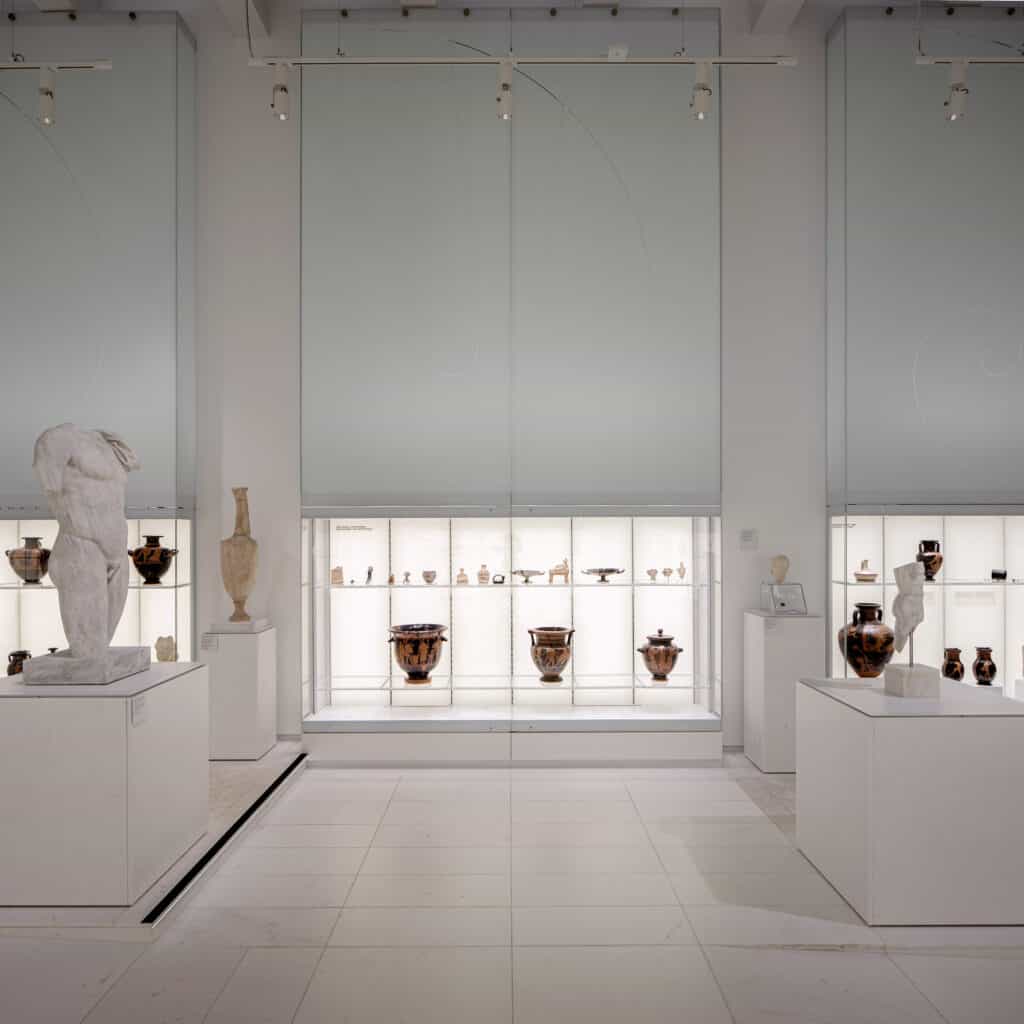
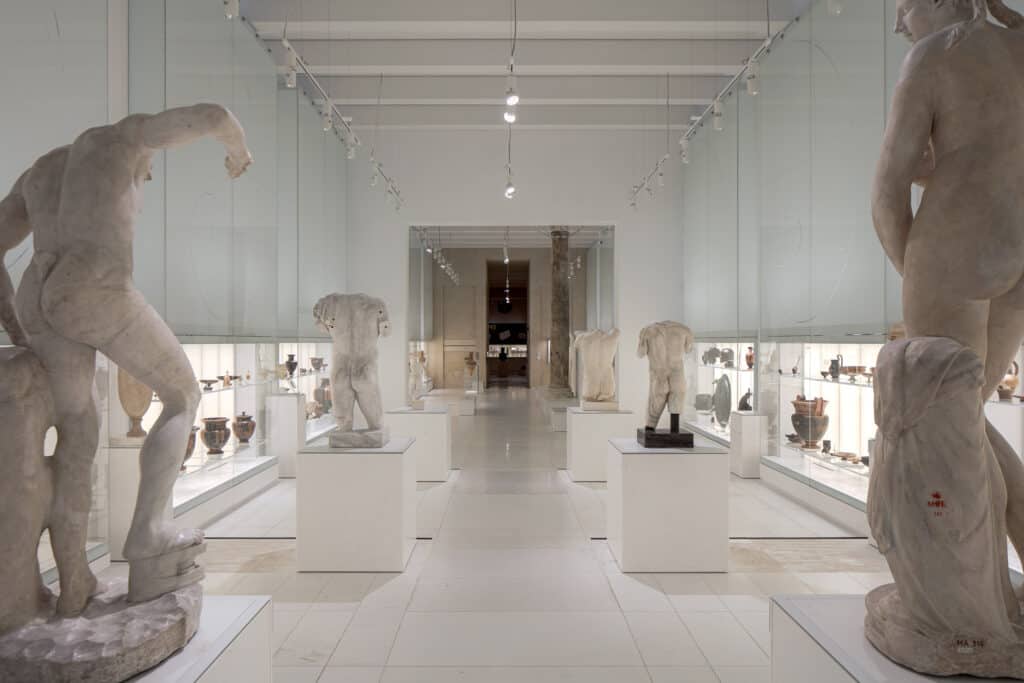
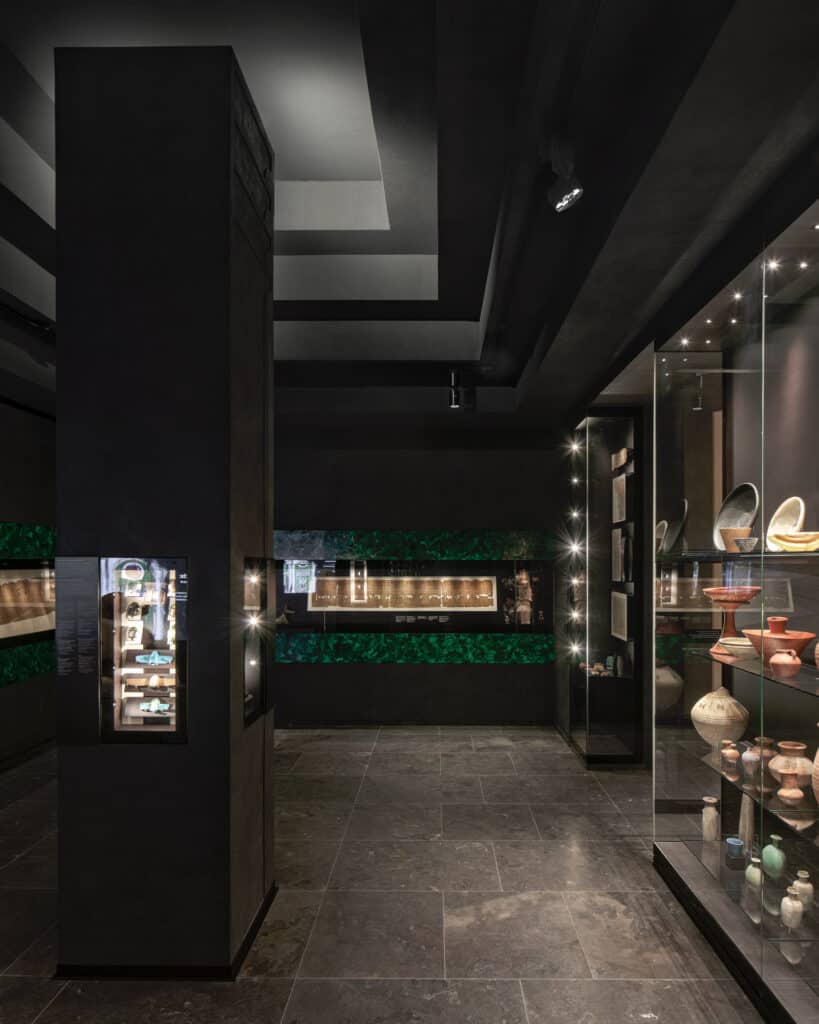
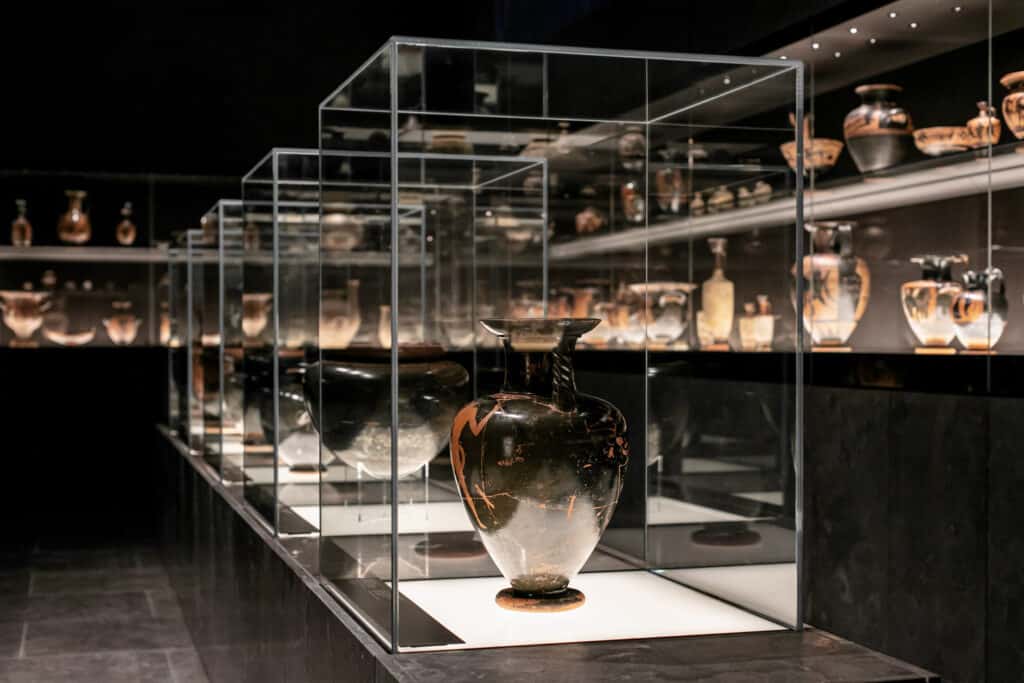
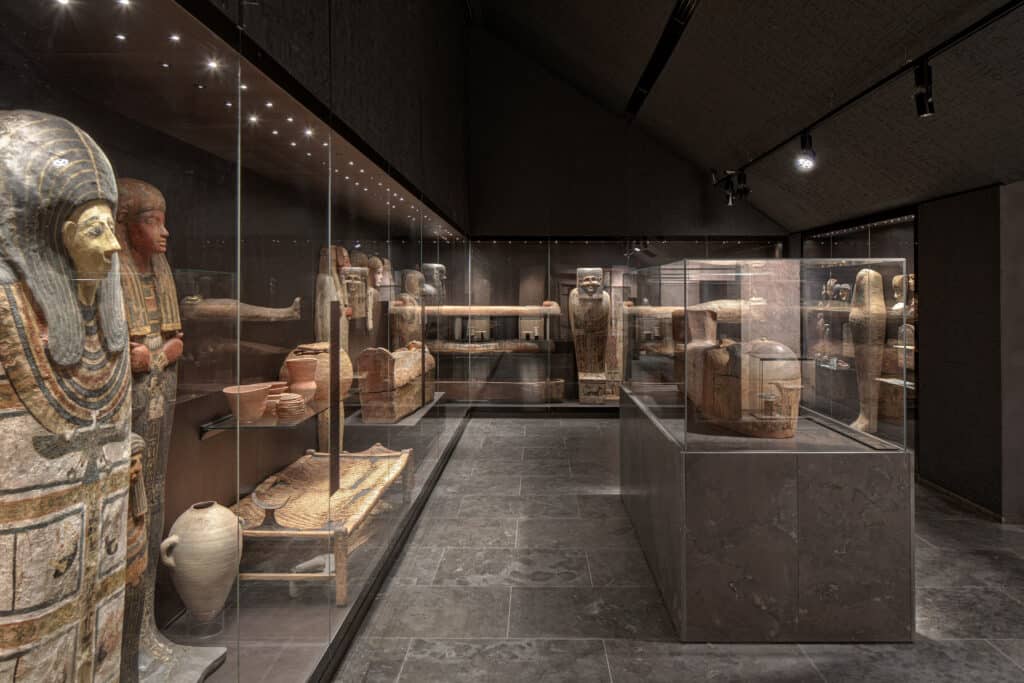
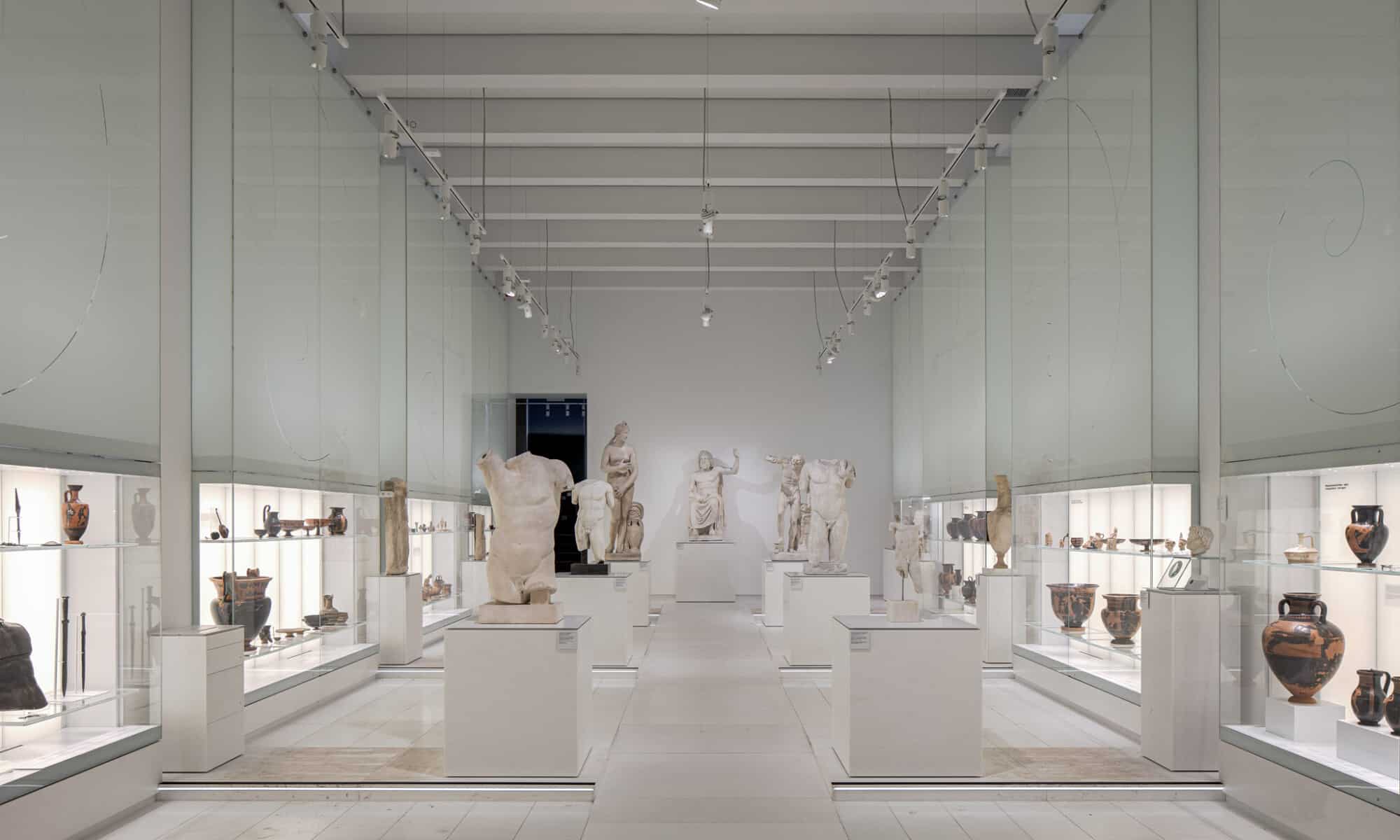
The concept of the Gallery is based on the symbolism of light and darkness – a motif that became the main narrative tool in designing the exhibition. It connects naturally with the layout of the National Museum building, designed in the 1920s by Tadeusz Tołwiński. The designers made use of the rhythm of the original windows and the orientation of the rooms relative to the points of the compass, so that the eastern part of the exhibition remains bright and sunlit, while the western part is shaded and mysterious. Through carefully chosen materials, lighting and colour, these spaces reflect the religious and philosophical dichotomies of ancient cultures: day and night, life and death, the earthly world and the afterlife.
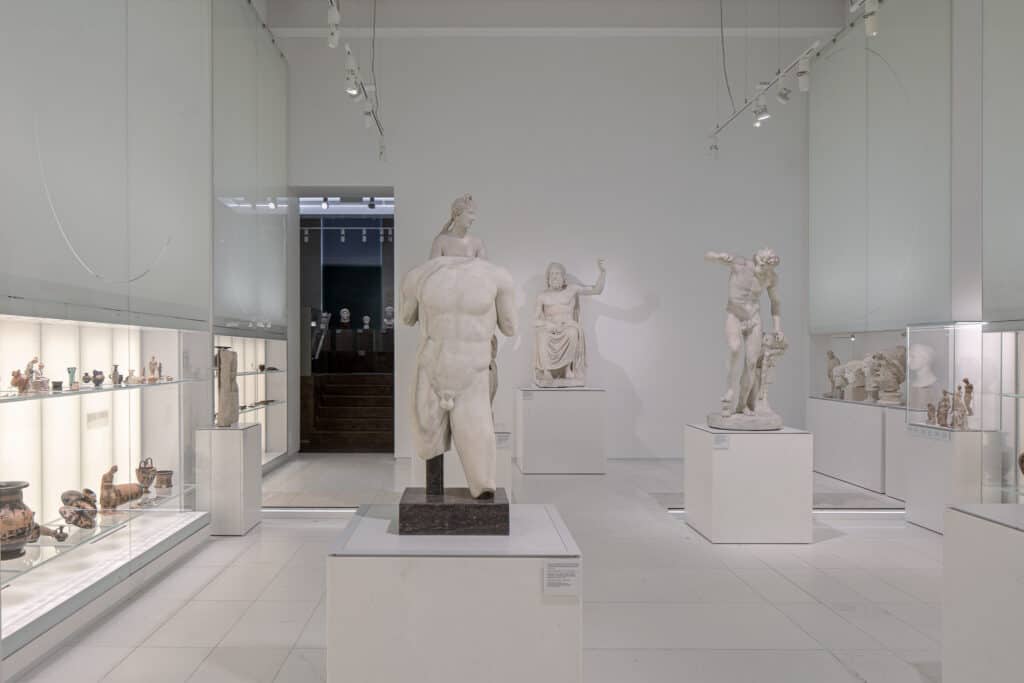
Nine thematic galleries have been laid out within the exhibition space, presenting the achievements of the ancient civilisations of Egypt, the Middle East, Greece and Rome. The roughly 1,800 exhibits include sarcophagi, mummies, papyri, sculptures, ceramics, jewellery, everyday objects, inscriptions and mosaics. The exhibition’s set design is subordinated to function: minimalist and full of symbolic references, it does not compete with the works of art but brings out their meaning and beauty. The project draws on the architecture, art and topography of the ancient world, but does so subtly and without literal reconstruction. Visitors are guided through spaces that evoke Egyptian temples and pyramids, the walls of Babylon, the interiors of Roman houses and Greek temples, while forms such as ramps, steps and monumental walls create the impression of stepping into the world of ancient cultures.
The narrative architecture used in the design of the Gallery of Ancient Art allows visitors to follow the story of how ancient civilisations intermingled and shaped the development of European culture. The exhibition not only presents historical artefacts, it also shapes the visitor’s emotional experience. The materials used – including graphite and grey limestone, white marble, sandstone and malachite – were chosen for their cultural and symbolic associations. The grey limestone in the section devoted to ancient Rome, for example, evokes the cement used in Roman construction, while the white marble recalls the classical beauty of Greek sculpture. Refined details also appear throughout: hieroglyphs imprinted on wall panels, pyramid-shaped vaults finished in graphite acoustic plaster, and a wall clad in malachite, a material associated with the cult of Osiris and the idea of resurrection.
From the outset, the Nizio Design International team treated the project as a story unfolding in space, in which the set design serves only as a backdrop for the historical narrative. The design draws on a language of symbols, light, colour and texture to create an environment conducive to contemplation and understanding of the content on display. “Working with the National Museum’s collection and spaces, we aimed to create a situation in which visitors want to step into the story being told, recognise it, and don’t feel lost, while at the same time remaining aware of the complexity of the issues hidden behind the artefacts on display,” explains Mirosław Nizio, the project’s author.
Visitors to the Gallery of Ancient Art will find Egyptian mummies (both human and animal) and sarcophagi, the burial equipment of high-ranking Egyptian officials (a bed, urns, ushabti figurines, vessels), funerary portraits (including the “Portrait of a Boy from Fayum”), elements of funerary and temple architecture (columns, capitals, “false doors”), cuneiform tablets, seals, pieces of weaponry, coins, sculptures, ancient glass and ceramics, mosaics, and inscriptions in various ancient languages (Greek, Latin, Aramaic, Punic and Akkadian). The classical presentation of the collection is complemented by multimedia installations, covering, for example, the seals of the ancient Middle East and what is Poland’s largest collection of ancient vases. The new exhibition is fully accessible to people with disabilities.
The Gallery of Ancient Art at the National Museum in Warsaw is one of the most comprehensive and contemporary examples of museum exhibition design in Poland. The project has been praised for skilfully combining tradition with a modern approach to museum practice, as well as for its outstanding artistic and educational qualities.