Muzeum i Miejsce Pamięci w Bełżcu

Museum of the Former Extermination Camp in Bełżec

The permanent exhibition “Bełżec – The Extermination Camp” at the Museum and Memorial Site in Bełżec is one of the most important, and ethically most demanding, museum projects realised by Nizio Design International.

The exhibition was created in 2004 in collaboration with an international team of historians, museum specialists and designers, including the US-based studio Gallagher Associates. Located on the site of the former German extermination camp at Bełżec, it commemorates around 500,000 victims – mostly Jews – murdered there as part of Operation Reinhard between March and December 1942. The key aim of the project was to create a space that would serve educational, documentary and symbolic/commemorative functions at once. The exhibition was built in a newly constructed museum building, forming part of a larger memorial and cemetery complex. The entire former camp site was treated as a mass grave and cemetery, with the museum building and its permanent exhibition forming an integral part of it.

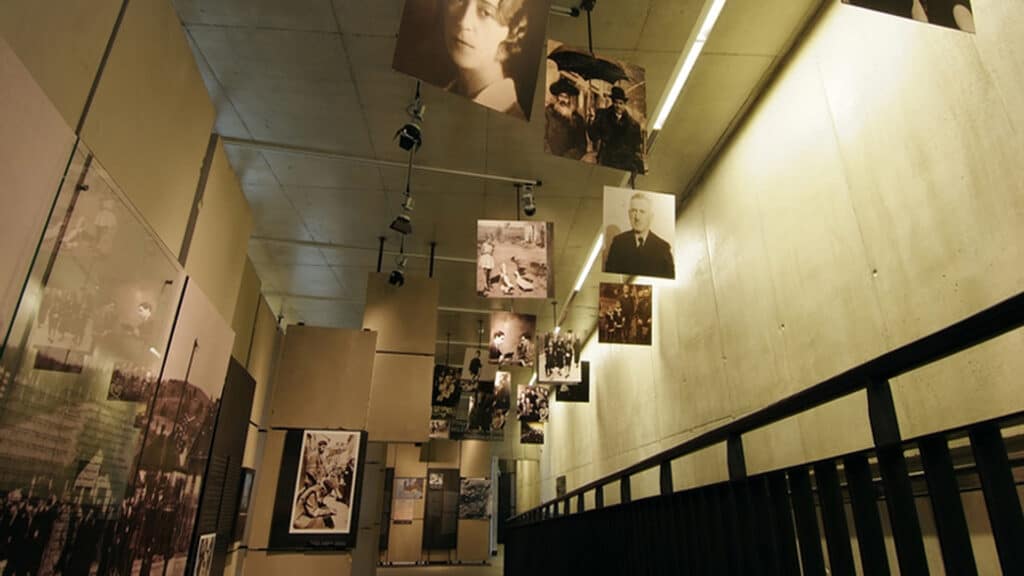
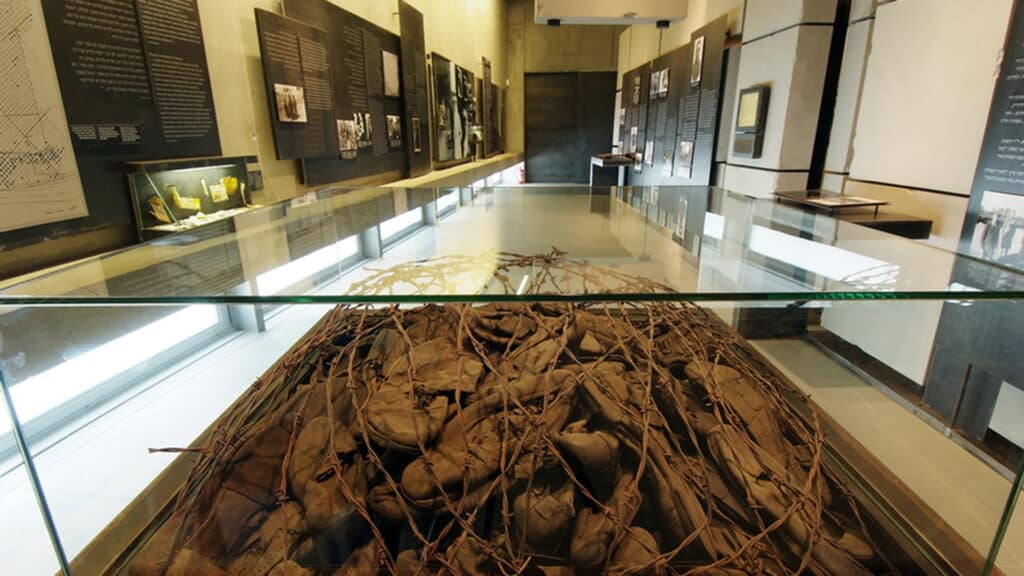
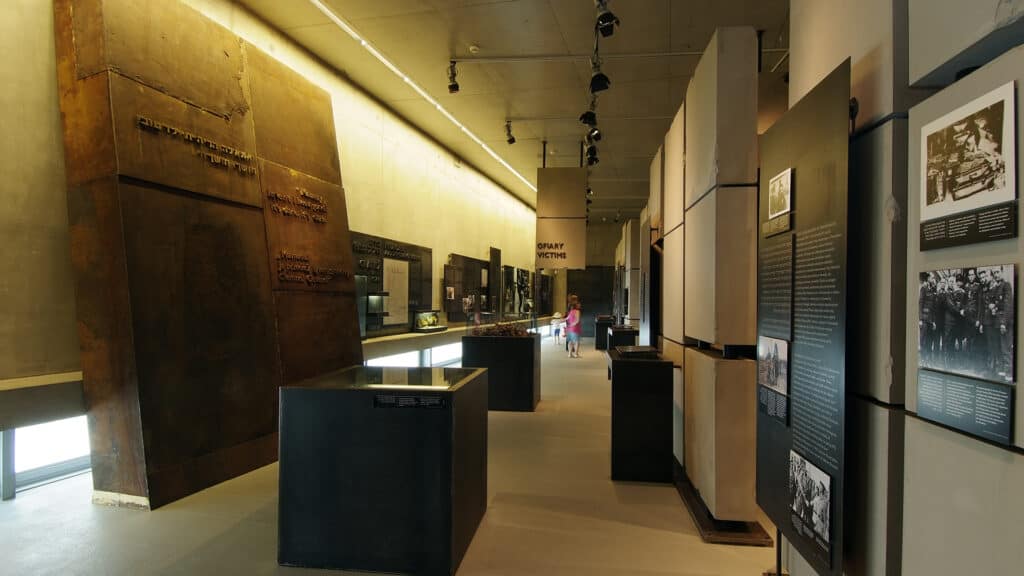
The exhibition’s narrative was developed on the basis of archival material, witness testimonies, and the results of archaeological research carried out on the site of the camp, which uncovered a number of relics and personal belongings of the victims. Numerous artefacts connected with the prisoners’ everyday life were discovered, providing material evidence and a starting point for the narrative running through the whole exhibition. The exhibition was designed as a multimedia educational installation with strong emotional weight, made up of five consecutive narrative zones: “Life”, “Hatred”, “Deportations”, “The Extermination Camp” and “Memory”. Each is given a symbolic title in three languages – Polish, English and Hebrew – underlining the site’s international character and its significance for the global memory of the Holocaust.

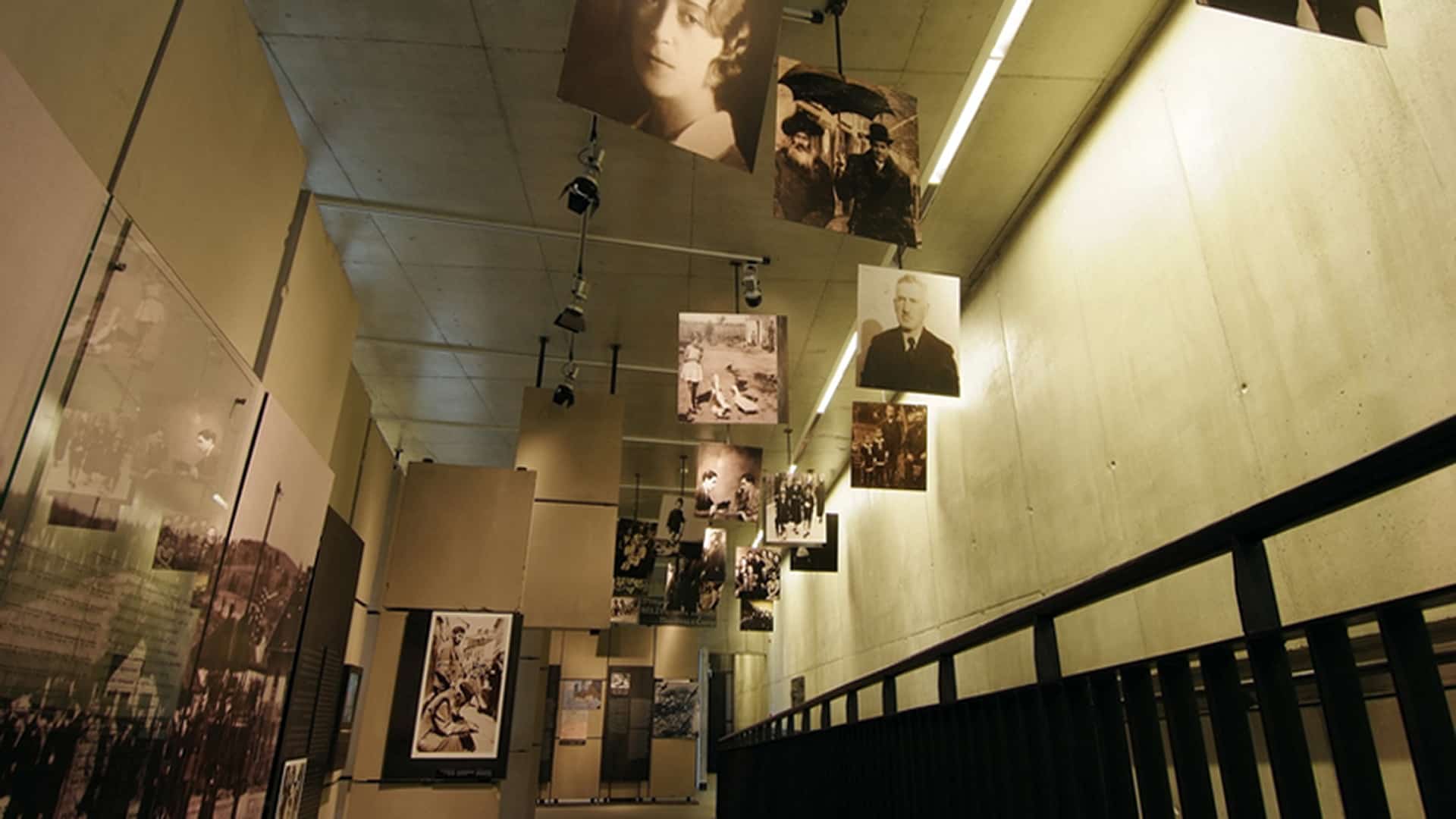
The architectural and scenographic concept of the exhibition is built on the dramaturgy of colour and light. The exhibition spaces shift tonally from light, bluish-grey tones in the “Life” zone to dark grey, almost black, in the “Memory” zone. The controlled change in colour and light intensity was designed to reinforce the emotional message and build narrative tension. Visitors are guided through successive stages of the camp’s history – from the pre-war life of Jewish communities, through the rise of antisemitism, deportations and the process of extermination, to present-day memory and reflection. Archival photographs, film fragments, documents and recorded testimonies of survivors and witnesses are an important part of the project, incorporated into the space in a way that allows for quiet focus and individual experience.

The minimalism of the form and the austerity of the materials used – steel, glass and concrete – carry meaning that is both aesthetic and symbolic. The project deliberately avoided unnecessary or decorative elements, so as not to disturb the historical message or compromise the gravity of the site. As a result, the exhibition contains no scenographic effects in the conventional sense – instead, the strength of the narrative rests on history itself and its material traces. Every element of the exhibition was subordinated to the overriding idea of memory, both individual and collective.

The project earned recognition among museum and architectural circles both in Poland and abroad. It was praised for its innovative approach to a difficult subject, its high standard of historical content, and its formal and conceptual consistency. Today, the Museum and Memorial Site in Bełżec is one of the most important points on the map of Europe’s Holocaust memorial sites, and stands as an example of architecture, design and historical narrative working effectively together in the service of education and memory.

For Mirosław Nizio and the Nizio Design International team, the permanent exhibition in Bełżec represents not just a professional undertaking but, above all, a mission. It is an example of design deeply rooted in historical, cultural and social context. The project confirms the studio’s expertise in creating exhibitions and museum spaces of high complexity – both technological and emotional – along with a sensitivity to heritage that must be protected and passed on to future generations.

Located in south-eastern Poland, Bełżec was one of the deadliest extermination camps established by the Nazis during the Second World War. It operated from March to December 1942 and was part of Operation Reinhard, the plan to murder the Jews of the General Government – the German-occupied territory of Poland. The camp was situated near the Lublin–Lviv railway line, which made it accessible for the transport of Jews from various regions. In total, 434,500 Jews, along with an undetermined number of Poles and Roma, were deported to Bełżec and murdered there. Most of the victims came from the Galicia, Kraków and Lublin districts of the General Government, as well as from Germany, Austria and Czechoslovakia.